
CBAM information
CBAM & Our Pricing Model
CBAM – What does it mean for you as a customer?
CBAM (Carbon Border Adjustment Mechanism) is an EU regulation designed to price carbon emissions embedded in certain imported goods, such as steel, aluminum, and cement.
Starting January 1, 2026, importers must report emissions and purchase CBAM certificates corresponding to the actual climate impact.
The CBAM cost is a legal requirement, not a voluntary surcharge.
Our Pricing Model – Fair, Transparent, and Data-Based
In a market where general price increases and standard markups are often justified by CBAM, we have chosen to work in a more precise and transparent way.
✔ Only actual cost per affected item
We calculate the CBAM cost using real emissions data or EU standard values where such data is unavailable. We never apply standard markups.
This means you only pay the actual cost, no more, no less.
✔ No cost on existing inventory
We do not charge CBAM on products imported before the regulation came into effect.
This ensures that you as a customer do not pay for costs that do not exist.
✔ Full transparency throughout the chain
Upon request, we can show how the CBAM cost has been calculated, including emissions data and certificate pricing.
We want you to be able to trust that every cost is justified and clearly presented.
In short: The right price from the start
By basing the CBAM cost on real data, we ensure that you never pay more than necessary.
This is how we create long-term value, build trust, and help you make confident purchasing decisions.
“We ensure that you never pay more than necessary: our CBAM cost is based exclusively on real data per item. No standard assumptions, no hidden markups. This means the right price from the start and full transparency throughout the entire transaction.”
CBAM Cost Structure
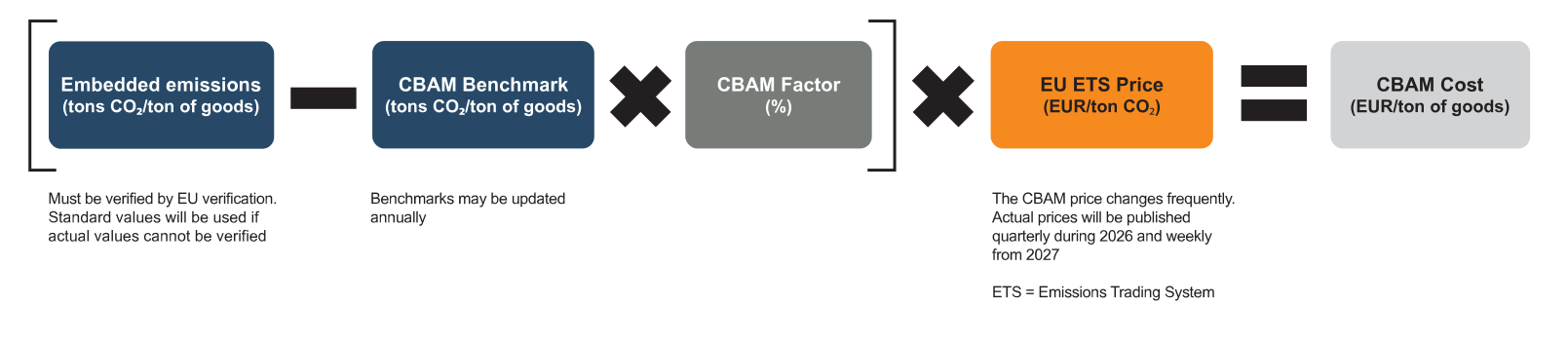
How is CBAM calculated?
-
CBAM benchmark values have been established for 2026 & 2027. These are defined per product group and manufacturing method.
-
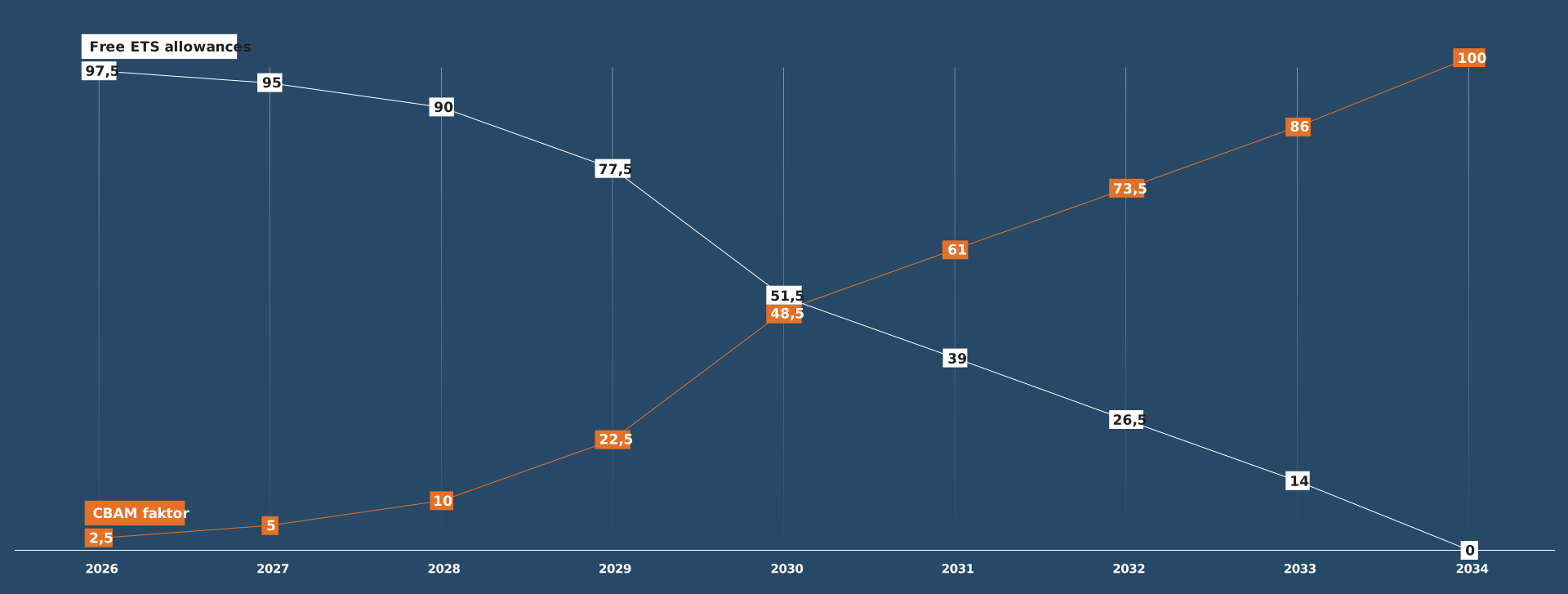
The CBAM factor will be phased in from 2026 to 2034. As the factor is introduced starting in 2026, production within the EU covered by the EU Emissions Trading System will also need to purchase emission allowances. See graph below.
Full effect will not be reached until 2034, when all emissions will require allowances. -
The EU ETS price is estimated at EUR 90.
Actual prices will be published quarterly during 2026 and weekly from 2027. -
Until 2034, emissions above the CBAM benchmark will require the surrender of emission allowances for the excess portion as well as for a percentage of the benchmark level.
What is CBAM?
CBAM is an EU regulation that assigns a cost to the carbon emissions embedded in certain imported goods, such as steel, aluminum, and cement. The goal is to create fair competition and reduce global emissions.
Why does CBAM affect prices?
From January 1, 2026, importers must purchase CBAM certificates corresponding to the emissions in imported goods. This is a legal requirement and represents a real cost.
How do you calculate CBAM costs?
We always use verified emissions data from suppliers when available, and EU standard values when data is missing. This means costs vary between products but always reflect actual emission levels.
Do you charge CBAM on goods already in stock?
No. Goods imported before CBAM started generating costs are not charged.
We only apply CBAM where the cost actually arises.
Can I see how the CBAM cost is calculated?
Yes. Upon request, we can provide emissions data, calculation methods, and certificate pricing. We work with full transparency to give you confidence in your purchase. You can also find out how much CO₂ your purchases have generated.
Does CBAM apply to all products?
No. Only goods made of steel or aluminum that fall under the EU CBAM regulation are affected.
When will I as a customer notice the impact of CBAM?
CBAM applies to imports from January 1, 2026, and charges are applied when the cost arises.
Our pricing information is continuously updated as new data becomes available.
Why do CBAM surcharges differ between suppliers?
CBAM is based on actual emissions. Suppliers with higher emissions or without verified data incur higher costs using EU standard values.
This means the CBAM impact can vary between suppliers and products.
How do you work to reduce CBAM costs?
We prioritize suppliers who can provide verified emissions data and actively optimize sourcing to minimize costs for our customers.
Do you apply general percentage markups?
No. We do not use standard markups or apply general price increases due to CBAM.
You only pay the actual cost for affected items.
Do you need to pay ETS for production in Europe?
Yes. If production is covered by the EU Emissions Trading System (EU ETS), emission allowances must still be purchased and reported within Europe.
CBAM does not replace EU ETS.
The system complements it and primarily applies to imports from countries outside the EU.